EngineeringDiscuss a project
Coreless · Channel · Foundry
Induction melting systems for foundries
HBB Induction engineers induction furnaces as one system comprising furnace, coil or inductor, converter, compensation, cooling, protection and automation.
01
Selecting the induction furnace
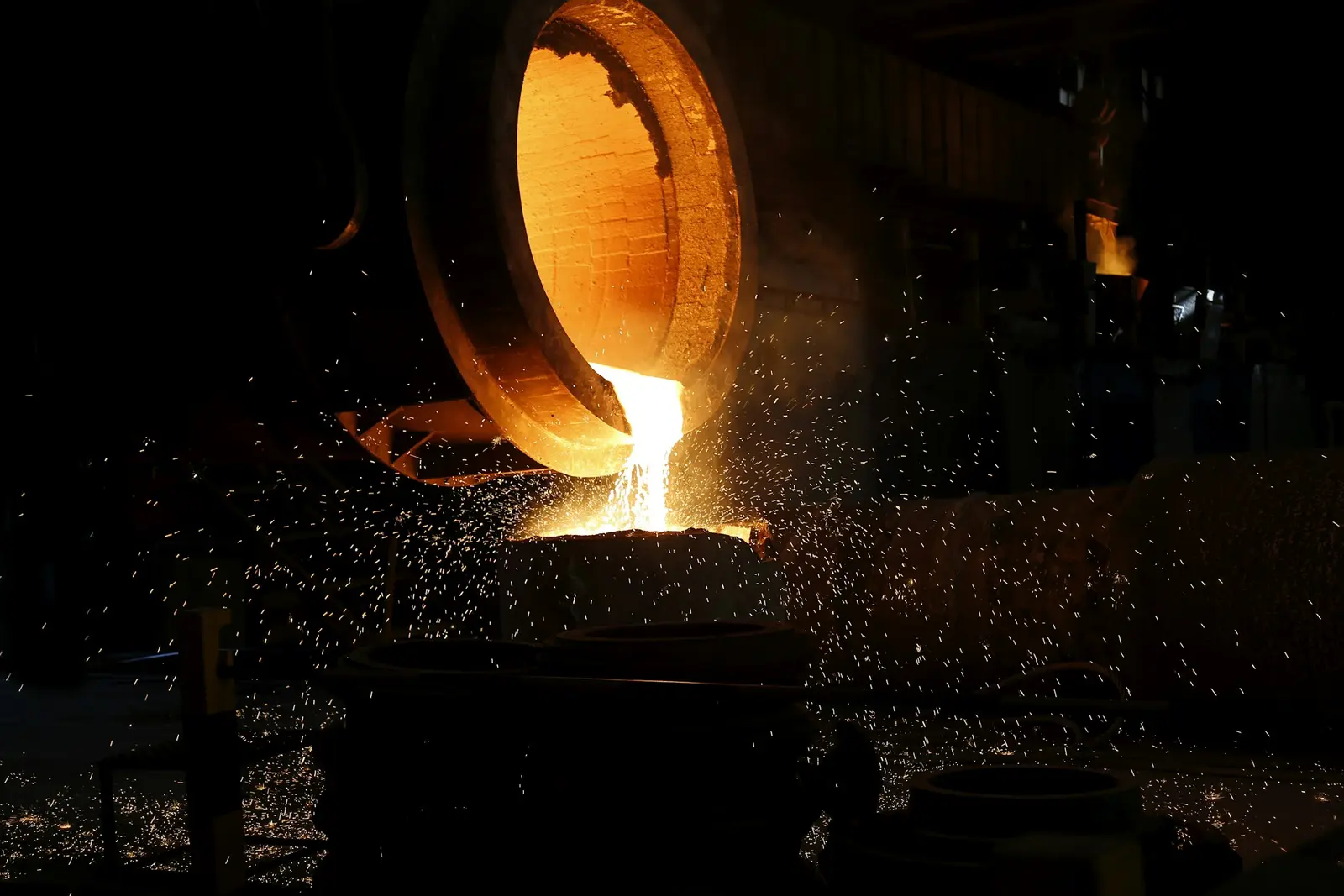
Material, usable capacity, melt rate, charge sequence, holding time and alloy changes define the furnace concept. Coreless furnaces provide flexibility, while channel furnaces are well suited to continuous holding and specific production duties.
The system design includes grid connection, transformer, converter frequency, capacitor bank, power conductors, cooling and protection.
- Ferrous and non-ferrous metals
- Melting and holding
- New plants and retrofit
02
Electrical and thermal design
Coil or inductor geometry, coupling, frequency and power density affect bath movement, melt time and component loading. Electrical matching must keep currents and voltages within safe limits across the operating range.
Cooling circuits and protection functions are engineered from actual losses and operating conditions.
- Load characteristic and resonance
- Capacitor bank and power cables
- Cooling and safety monitoring
03
Availability and energy performance
Existing melting systems can be upgraded with modern converter technology, PLC/HMI, measurement and optimised compensation.
The objective is stable melt rate, low specific energy demand, repeatable batches and high availability.
- Measurement and diagnosis
- Converter and control retrofit
- Melt rate and kWh/t optimisation
HBB Induction
Assess your melting system
For an initial assessment, provide metal, furnace type, capacity, power, frequency, melt time and available electrical data.
HBB Induction EngineeringContactinfo@hbb-induction.com